A personal account of a journalist who had the opportunity – and the guts – to visit the facilities of the Alma observatory, located at 5,000 meters altitude, in Chile.
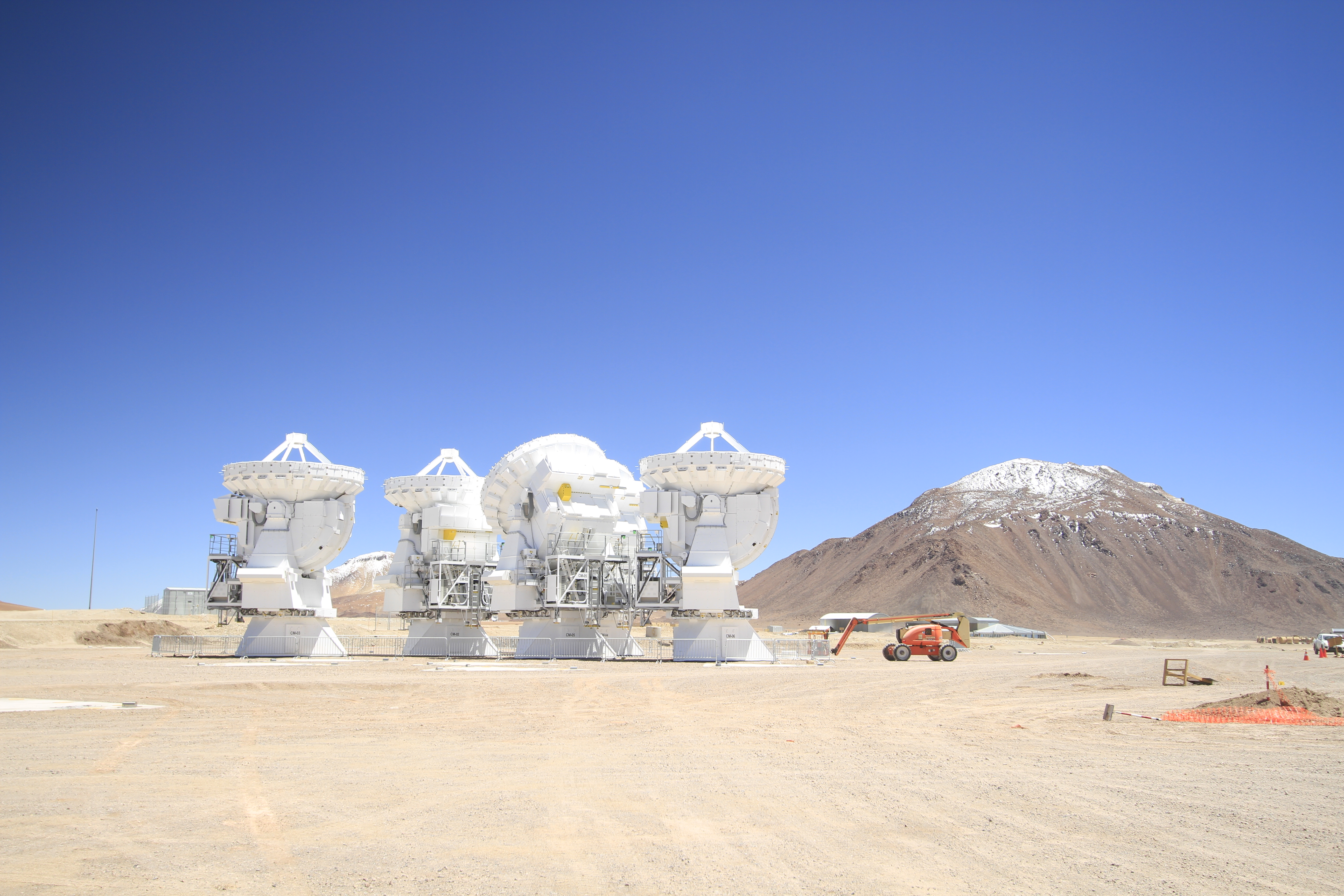
Imagine being in the second-highest human construction in the world, at five thousand meters of altitude. If you do not know what that involves, I tell you from experience: it is so cold that your ears freeze; so windy that it is useless to try keeping a conversation outside and the oxygen level in the air is half of the amount at sea level, making breathing and even thinking too hard. A simple step seems like a race to your lungs. Due to the lack of oxygen, your body tries to protect your brain, sending extra blood to it. The pressure in the skull triggers a headache. You get dizzy and stupid. The condition is known as the “mountain sickness”.
It was under these conditions that I visited – very lively after all – the Atacama Large Millimeter and sub-millimeter Arrangement (Alma, its acronym in English), at the high plato of Chajnandor in Chile, that to complete, is at the driest desert in the world.
Before climbing to the top, where there are already 16 antennas that will form the radio telescope capable of seeing the universe colder, dark and distant zones, The rest of the group of Brazilian journalists and I, invited to see the place, stopped at 2900 meters to undergo a medical examination, which would give the nod to proceed (or not).
At the exam room, for our ‘reassurance’, a corkboard on the wall highlighted the following news: “23-year-old British athlete dies of altitude sickness in Chile ‘. Strategically positioned, the material told the young woman, winner of many awards for athletics, had died in Atacama because of what the natives call “a punishment”.
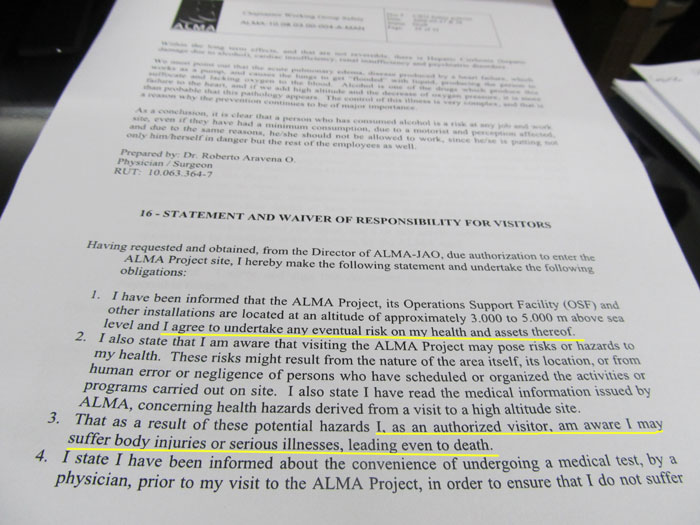
Despite the impact of this information, everyone’s blood pressure remained at the limit to pass the test and be able to sign a macabre agreement in which, forgive me the pun, I gave my soul to Alma (soul in Portuguese). By signing the two-page document, we journalists disclaimed any liability for the observatory concerning our eventual death, even by the negligence of the staff working there.
“The altitude sickness is still understudied and you never know what can happen,” said our guide, Fabio Marchet, vice project manager for the Alma. “There is the risk of death, but many people just feel a malaise.” And in an attempt to calm us down, he continued: “Do not worry about the brain aneurysm, because we will be up there shortly.”
During the van ascent, we were constantly monitored with an oximeter, a small device that measures the oxygen level in the blood only by contact with the tip of your finger. All patients received oxygen bottles entitled to 42 sniffles and instructions not to fear to use them, especially if the oxygen level in the blood fell below 80%. I do not know if the equipment was working fine, but from 96% at the beginning of the path, my oxygen level dropped to 60%.
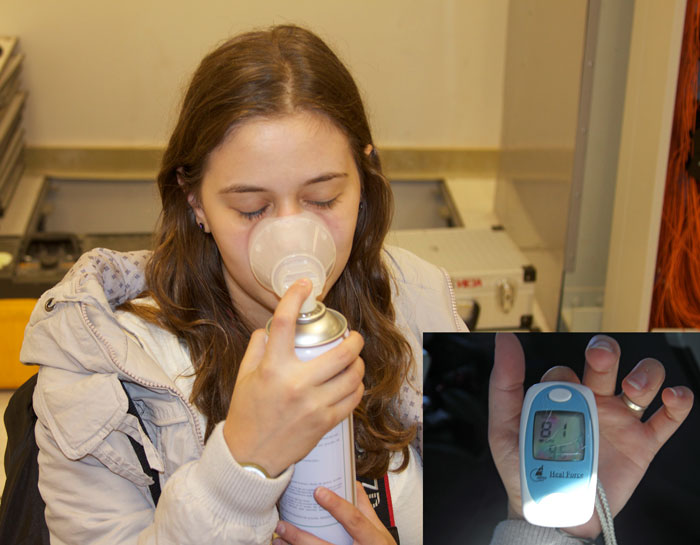
Despite having several pounds of air less topping my head than usual, because of the altitude, the feeling was of enormous pressure on my whole body. But I survived, with a persistent headache and a few milliliters less of blood that insisted on gushing from my nose.
At the support room, the only building next to the antennas, everyone was working with oxygen backpacks attached to their back, seemingly terminally ill people. The electronics engineer Alejandro Saenz, responsible for the supercomputer that controls the antennas of Alma, he says to be already familiarized, because he faces this routine since the first antenna was moved for the top of Chajnator in 2009.
“I have no fear and just got more scared when I knew I could hurt my brain,” he responds in jest, as he did not care. “But the observatory provides the necessary infrastructure for the work to be safe and everyone here knows the risks of altitude. Until now my only problem was on my first day, when I felt tired and had a too strong headache, but after that, your body gets used to it and starts to produce more hemoglobin to carry oxygen.”
After the experience, I began to admire even more about the people behind the equipment that make the beautiful images we see in the universe. Not only telescopes go beyond the physical limits to do science.
*I was invited to visit the ESO’s facilities in January 2012. The stories I wrote during the trip can be read here (in Portuguese)
 Sofia Moutinho