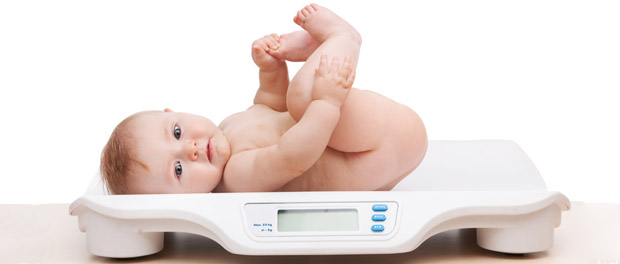
Birth weight is one of those measures that parents care about. They are proud of baby’s every pound—and the less a baby weighs, the more parents and pediatricians tend to worry. This is perhaps why a recent study showing that U.S. birth weights have declined made it into the Washington Post. Researchers from the University of Colorado found that between 1990 and 2013, the national birth weight average dropped from 7.24 to 7.14 pounds.
The research, published in the journal Demography, concluded that the loss of 67 grams — or 2.4 ounces, more or less the weight of a large chicken egg — in two decades is due to a rise in cesareans and induced births, which have shortened the average pregnancy by about a week.
“I’m glad I had my babies before these excuses drove medical decisions,” one Washington Post reader noted online. “I don’t know anyone recently who just had the kid like happened back then.”
But some researchers and doctors are skeptical about this interpretation of the findings. They said that the observed drop in average birth weight may not be directly linked to the interventions and also question whether the trend is worrisome — it could even be a good sign.
Previous research has shown that birth weights began to fall in 1990, but the reason was unclear. “It seemed to be a puzzling phenomenon that no one was able to clearly explain, despite much speculation,” said Andrea Tilstra, a Ph.D. student and the lead author of the study, which was funded by the National Institutes of Health.
To try to find a reason for the drop, the two authors analyzed data from more than 23 million first-born babies from healthy mothers. They grouped the data by the kind of delivery (cesarean, vaginal, induced or not) and considered some other information, such as the gestational age of the babies and socioeconomic status of the mothers.
They noticed that fewer births stretched beyond 40 weeks in the last two decades, and most of them occurred between 37 and 39 weeks. Babies were, on average, arriving a week earlier compared to the beginning of the ’90s. They also observed that the rate of induced labor more than doubled and that of cesarean deliveries rose 10% in the period. Cesareans have been a hot topic in public health for several decades because high rates have been linked with surgical complications and respiratory problems in newborns. The World Health Organization recommends a rate of 15%. The U.S. rate is now 26%.
To determine the role of c-sections and inductions, Tilstra and her colleague ran a model simulating when the births would have occurred if these interventions had not increased and how much more weight the babies would have had. They found that without the interventions, the average birth weight would have increased by 0.4 ounces, the equivalent of a small packet of fast food mayonnaise.
“I was surprised at the magnitude of the effect,” Tilstra said.” If rates of cesarean deliveries and induction of labor had not increased over time, then the average U.S. birth weight would have increased. Instead, it declined.”
But biostatistician Martina Pavlicova of Columbia University’s medical school pointed out a problem with the simulation: it looked at obstetric interventions as the key factor and assumed that mothers’ behaviors and lifestyles remained the same.
“If people from 1993 had exactly the same habits as people from today, theoretically, it would be possible to reach this conclusion,” Pavlicova said. “But it is presumptuous to think the population didn’t change. There could be many confounding factors besides the c-sections. You can’t say one thing is causing the other.”
Today, parents are often older, and more women are working. A possible explanation for the findings, Pavlicova said as an example, would be that women who are having c-sections are the same ones who work and are skinnier and who are therefore having lighter babies. In that scenario, babies would be born weighing less because of the mother’s lifestyle and not because of the c-sections.
Similar demographic studies conducted before concluded that c-sections are not the most critical variable. A 2010 study in the journal Obstetrics & Gynecology looked at the same data that Tilstra did, although for a shorter period (from 1993 to 2005), and concluded that it was not possible to identify the causes of the decline. One of the authors, Emily Oken of Harvard University, also analyzed data from Utah, where the rates of cesareans plummeted between 2000 and 2008. “There was no increase in birth weight. In fact, the birth weight continued to decline throughout that period,” she said.
C-sections might even be protective in some cases. The new study shows that full-term and post-term babies had the biggest decrease in weight. Amy Tuteur, author of the blog The Skeptical OB, said that the decline in birth weight could be due to the rise of induced births or c-sections of full-term big babies. These are considered high-risk pregnancies, and obstetric interventions are recommended.
“The fact that the birth weight is dropping may not be a bad thing at all, it can actually be a good thing,” Tuteur said. “If the majority of the c-sections are being made for babies that otherwise would grow too big to be born by vaginal delivery, it is a good thing.”
And, ultimately, birth weight should not be considered alone, Tuteur and some other experts said. Other outcomes, such as the neonatal mortality rate, should be taken into account.
“The study has offered no evidence that this drop in weight is clinically significant,” Tuteur said. “While it is true that low birth weight can lead to increased mortality, it didn’t happen in the studied period. Whether or not a given baby survives is far, far more important than what it weighs at birth.”
The observed drop in birth weight average still leaves most newborns in a safe range, with an average birth weight of 3.24 kg (7.4 pounds). A baby is considered low weight — and at risk for health complications — when born at less than 2.5 kg (5 pounds).
If more premature babies are surviving, that too could explain the average decline in weight, Tuteur said. The number of babies who died 28 days after delivery did decline between 1990 and 2011, from 3.7 per thousand births to two per thousand, according to the Centers for Disease Control and Prevention.
Even so, the author of the study said that the high rate of U.S. c-sections should be addressed. “I would caution against making extrapolations to perinatal mortality without first examining the research that discusses the links between cesareans and perinatal mortality (and there is a lot of it!),” she said over email referring to data that suggests that c-section can increase the risk of newborns and mothers death when conducted without the proper indication — for example, in full-term pregnancies without underlying health conditions.
At the moment, however, no one knows for sure what the decline means. In the last 20 years, the profile of American mothers has changed a lot: they have higher levels of education and more access to prenatal care, and they are older and fatter. The question of why the birth weight is decreasing in the U.S. remains unanswered, as well as whether it is good or bad news.
 Sofia Moutinho