TB is preventable and curable, yet it afflicts 1/4 of the world’s population
_SCIENTIFIC AMERICAN
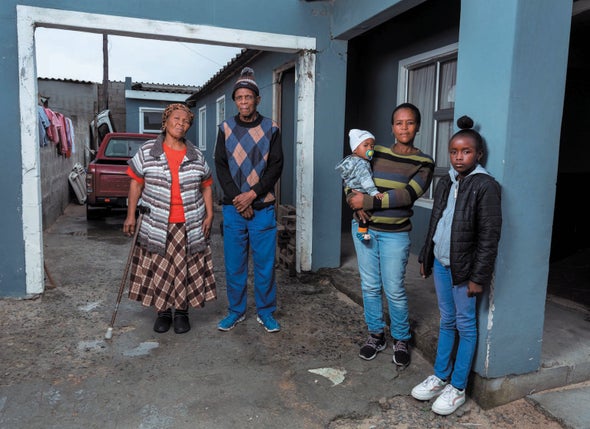
Meera Yadav gave birth to her first baby in 2013, when she was a 23-year-old living in a slum in Mumbai, India, with her husband’s family. She was filled with joy and hopes for a bright future. But four months later she began having fevers and coughing up blood.
Yadav’s husband took her to a private hospital, where a doctor prescribed blood tests, a chest x-ray and a sputum test.
She was diagnosed with tuberculosis, a disease at least 9,000 years old that has likely killed more people than any other plague—as many as one billion in the past 200 years. Although the illness may seem like a historical footnote in high-income countries, it continues devastating poorer nations, afflicting the most disadvantaged: poor people, prisoners and those who are HIV-positive.
TB is a bacterial infection caused by Mycobacterium tuberculosis. It spreads when someone coughs, pushing bacteria into the air. In most cases, the immune system stops the bacteria from growing. It can remain in the body, dormant but alive, for years without causing symptoms or spreading. These cases are difficult to detect because people have normal chest x-rays and negative sputum tests.
But for about 10 percent of infected people, like Yadav, the infection develops into a serious disease and becomes contagious. Nearly two billion people—one quarter of the world’s population—are infected today. Roughly 10 million fall ill annually. Without treatment, most cases lead to prolonged illness that culminates in fatal respiratory failure; TB kills about 1.5 million people every year.
The World Health Organization estimates that more than 95 percent of these deaths are in low- and middle-income countries where malnutrition, lack of health care and crowded housing allow the disease to thrive and spread. In these places, inadequate public health systems fail to detect many cases, and effective treatment may be too expensive or unavailable. “Wherever there is poverty within a country, TB will find such people,” says epidemiologist Madhukar Pai, a TB expert at McGill University. “It’s mostly Black, brown, Indigenous and poor people who suffer from TB, and that’s why it doesn’t get much attention.”
It was easy for TB to find Yadav. She was living in poverty amid dilapidated houses stacked close together. Mumbai is one of the worst hotspots in India, a nation that accounts for one quarter of all diagnoses worldwide.
There is a desperate need for more research on TB. The one existing vaccine is ineffective in adults and almost a century old. Many strains of TB have developed resistance to antibiotics, and some are resistant to many or all drugs used to treat the disease. For years the WHO has been calling on nations to invest in developing better drugs and diagnostics. The agency estimates that an extra $1.1 billion is needed every year.
In recent years, global TB cases declined about 2 percent annually, too slow to hit the United Nations goal, announced in 2015, of ending the pandemic by 2030. The COVID pandemic exacerbated TB, overwhelming national health systems, making it impossible for many patients to receive treatment and pushing more people into poverty. “Even before the pandemic, we were not making good progress,” Pai says. “But the past two years have been so bad that we have lost something like 10 years of progress in TB.” In 2021, for the first time in more than a decade, TB mortality increased.
Despite this slide, there are reasons for hope. Across the globe, innovative initiatives focused on the most vulnerable patients are targeting prevention, detection and treatment. None of these efforts alone will vanquish TB. But they point the way forward to a future in which the disease is no longer neglected.
 Sofia Moutinho