Could Iron from Melting Glaciers Affect Global Climate?
_SCIENTIFIC AMERICAN
Episode description:
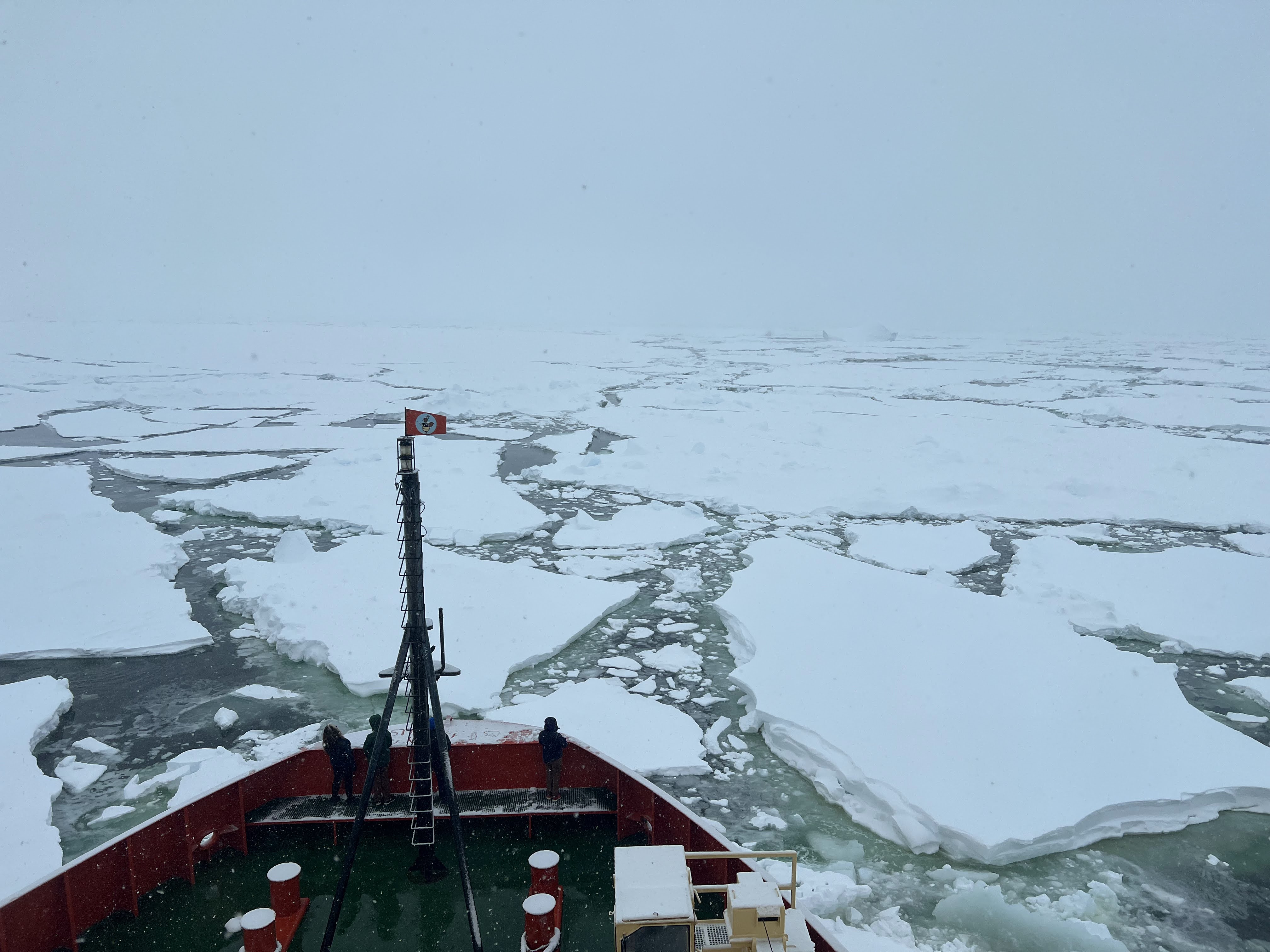
All aboard the Nathaniel B. Palmer, a research vessel making its way through the waters of West Antarctica. Journalist Sofia Moutinho is joining a team of chemists trying to find out how glacial melting is changing ocean chemistry—and what those changes might mean for the global climate.
The researchers want to know whether a negative feedback loop could take shape in Antarctica’s seas. Carbon dioxide contributes to the rise in warming that is melting the glaciers. As glacial melting releases iron, phytoplankton feast. Phytoplankton in turn remove carbon from the air, potentially causing a cooling effect.
Transcription:
[CLIP: Theme music]
Rachel Feltman: Antarctica is the largest, coldest desert on the planet, with snowfall dropping less than six inches of water there each year. But for such a dry place, Antarctica has an outsize impact on the world’s oceans: the ice sheet that covers much of the continent contains most of Earth’s fresh water. You’ve probably heard that a lot of that ice is melting because of climate change and contributing to sea-level rise. But glaciers and ice shelves aren’t just made of frozen water. What else is the melt sending out to sea?
For Scientific American’s Science Quickly, I’m Rachel Feltman. You’re listening to the first episode of a four-part Fascination series on Antarctica.
For the next four Fridays, we’ll follow award-winning Brazilian journalist Sofia Moutinho as she travels on the Nathaniel B. Palmer, a U.S. icebreaker on a mission to help us understand how the climate crisis will unfold.
Today we’ll meet her on the ship as she and her fellow passengers encounter the fastest-melting glaciers and ice shelves on the continent.
[CLIP: Sound of waves]
Sofia Moutinho: I am on the bridge of the Nathaniel B. Palmer, a U.S. icebreaker that is slowly cruising along the coast of the coldest and most remote continent on Earth: Antarctica.
Thirty-five international researchers are onboard for a 60-day mission. Their goal is to collect thousands of gallons of water, plus lots of sea ice, to help uncover the future of our oceans and Earth’s climate.
You find the complete episode transcription here
Check out the next episodes:
Ep 02: Penguins in ParadICE
Ep 03: Life Onboard an Icebreaker
Ep 04: Contemplating our Climate Future in Antarctica
Science Quickly is produced by Rachel Feltman, Fonda Mwangi, Kelso Harper, Madison Goldberg and Jeff DelViscio. This episode was hosted, reported, and scripted by journalist Sofia Moutinho. The show is edited by Elah Feder, Alexa Lim, Madison Goldberg and Anaissa Ruiz Tejada, with fact-checking by Shayna Posses and Aaron Shattuck. The theme music was composed by Dominic Smith.
 Sofia Moutinho