_MONGABAY
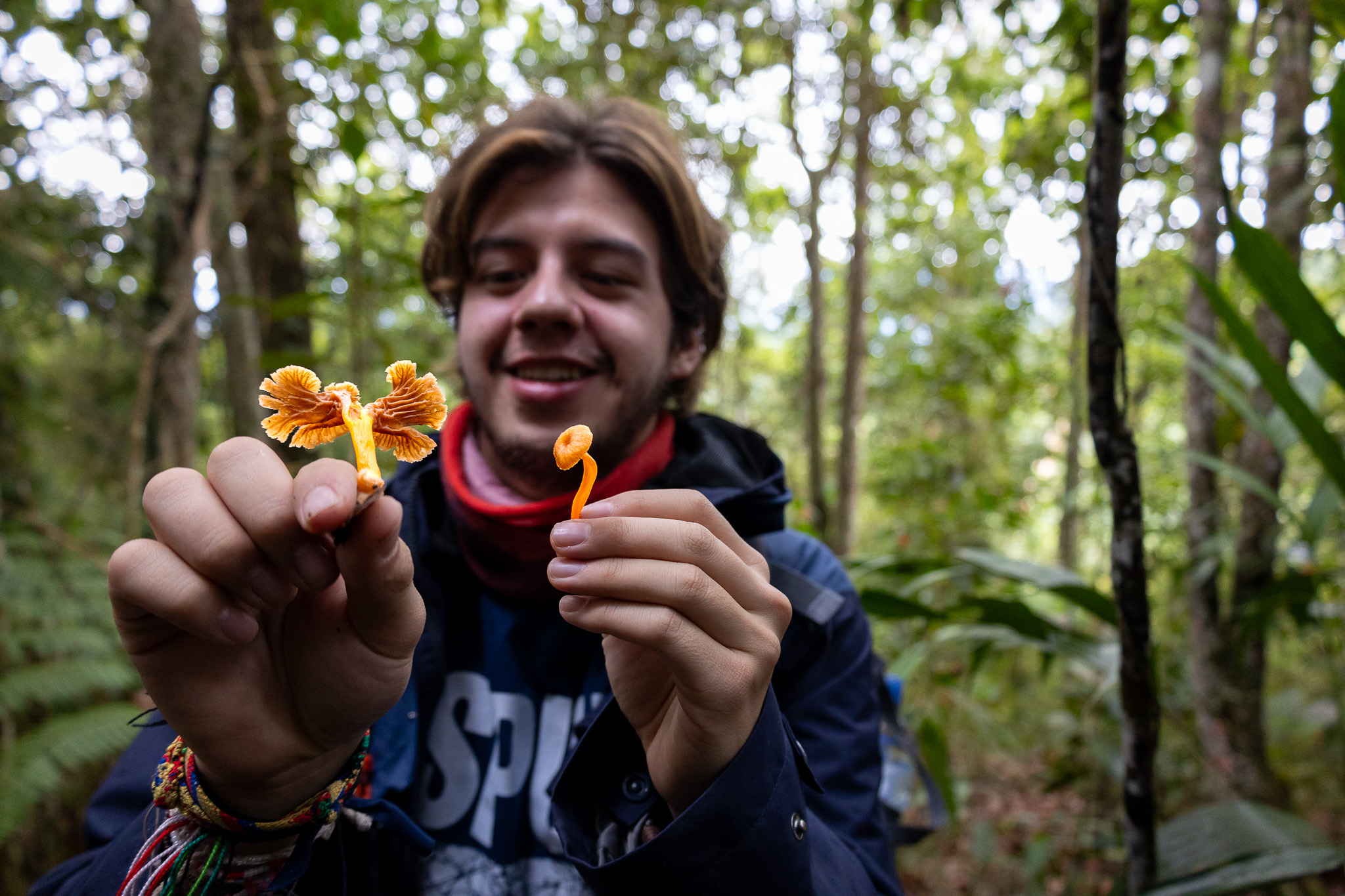
It’s a sunny July day during an otherwise exceptionally rainy season in the lush green mountains of Huila, in Colombia’s eastern Andes. Adriana Corrales, her assistant and a local guide climb through the dense cloud forest. Above them, birds sing and monkeys howl through the canopy of ancient Colombian black oaks (Trigonobalanus excelsa), an endangered tree species. But the researchers keep their eyes on the ground.
“All this forest above us, and we are here looking down,” says Corrales, a fungi ecologist and expedition leader at the Society for the Protection of Underground Networks (SPUN), a nonprofit research organization mapping fungi worldwide. For the last two years, the group has been searching in Colombia’s black oak forests for mycorrhizae, a type of fungi that establishes a unique symbiosis with plants that’s fundamental to keeping forests alive.
Most plants worldwide are associated with these fungi. Mycorrhizae grow around roots, forming vast networks of thin, cotton-like filaments that extend into the lower soil levels and reach the litter fall. Through this system, the fungi can break down organic matter, such as dry leaves, and even mine minerals in rocks and deliver water and essential nutrients directly to plants’ roots. In return, the roots provide the fungi with sugars, essential for their survival.
“The fungi form a microbiome on the plant’s roots in the same way that microbes in our gut help us digest food,” Corrales says. “We have these bacteria in our gut that break down the food we eat so we can absorb it. In this case, the fungi digest the food in the soil and bring the nutrients to the plant in exchange for sugar.”
Although researchers have been looking into this symbiosis since the late 19th century, no single genome of tropical mycorrhizal fungi from South America has ever been sequenced, compared to hundreds elsewhere. Among the reasons are lack of funding and difficulty accessing areas with fungi. But Corrales and other experts plan to change that.
 Sofia Moutinho