Inspired by Wallace’s visit nearly two centuries ago, an Indigenous community in Brazil worked with scientists to survey local birds and flip the script of how research gets done
_ AUDUBON MAGAZINE
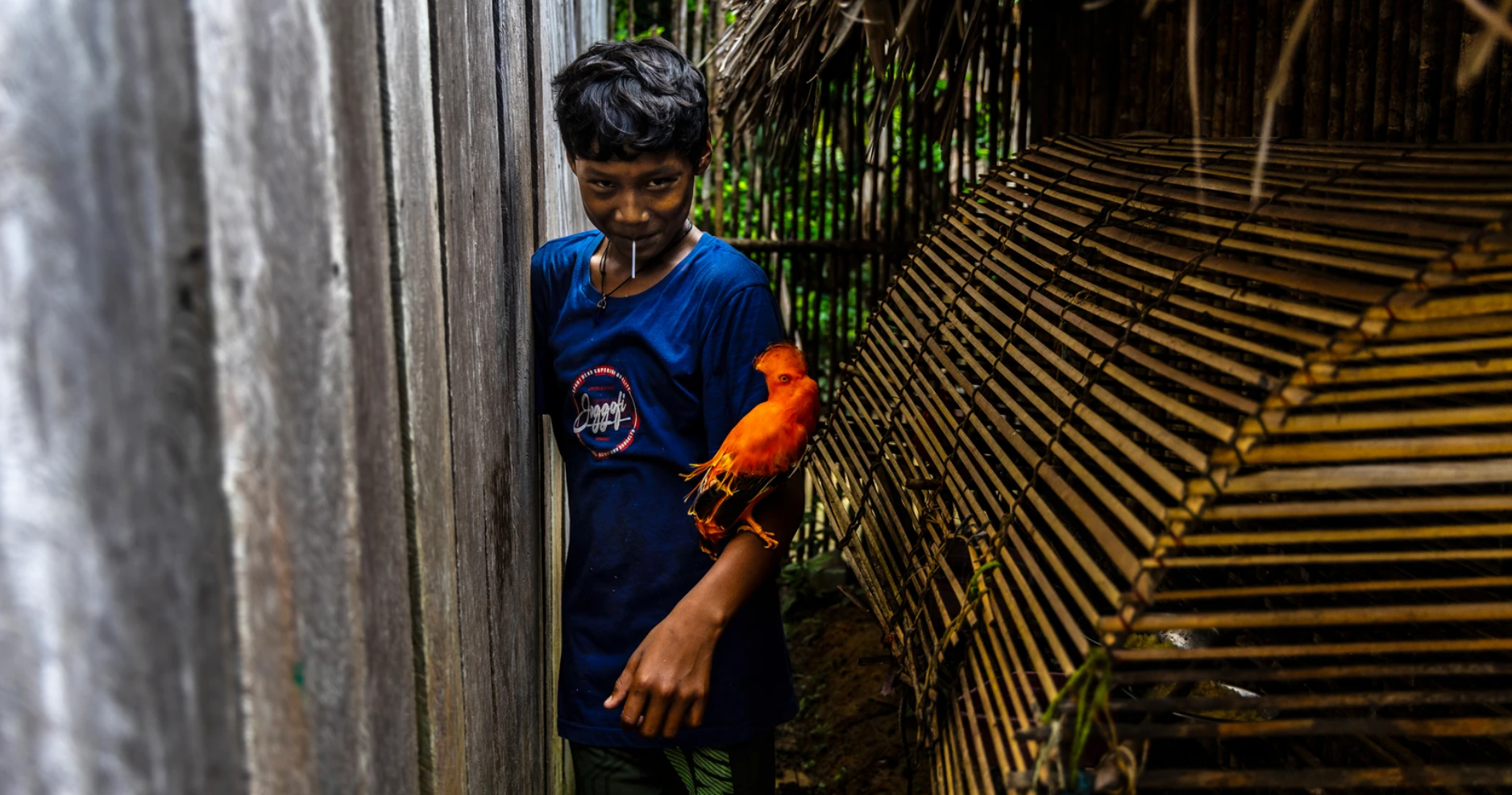
As the sun rises over the white sand beaches and reddish-black waters of the Cubate River in the Brazilian Amazon, a shrill cry echoes through the thatched-roof houses in the Indigenous village of Nazaré. It is the call of the Guianan Cock-of-the-rock, or galo-da-serra, as the bird is locally known. Despite its bright orange feathers and exuberant half-moon crest, this exquisite forest bird is difficult to spot in the wild. But Darlene Florentino, a middle-aged Baniwa woman, keeps the two males her husband gifted her in a branch-fenced coop in her home. Indigenous families in the Amazon commonly raise wild animals, and the Baniwa in Nazaré love birds.
Florentino’s husband collected the birds as chicks, retrieving them from a mud-plastered nest atop a massive rock inside a cave. The pets are the family’s xerimbabos, an Indigenous word for animals with which they’ve established a special bond. Several times a day, Florentino feeds them with fruits and xibé, a mixture of manioca flour and water. “They eat everything!” she says proudly as a cock-of-the rock hops onto her wrist. “He is a pretty boy.”
Tales of the cock-of-the-rock’s beauty date back centuries. In 1850 famed British naturalist Alfred Russel Wallace arrived on the land of Florentino’s ancestors, determined to find the exotic bird. Wallace, known for developing the idea of evolution by natural selection independently of Charles Darwin, traveled through the Amazon for four years, making observations that later helped form his theories. Midway through this journey he navigated the Cubate River in a 35-foot-long canoe loaded with birdcages, food, and guns, along with cloth, beads, and other articles to exchange with the locals he hoped to hire to find the species.
Like most contemporary Baniwa people, Florentino hadn’t heard of Wallace. Isolated in small settlements in the heart of a vast area of preserved forest bordering Colombia and Venezuela, the Baniwa endured centuries of violent Portuguese colonization and a continued legacy of oppression that wiped out many of their cultural habits and histories.
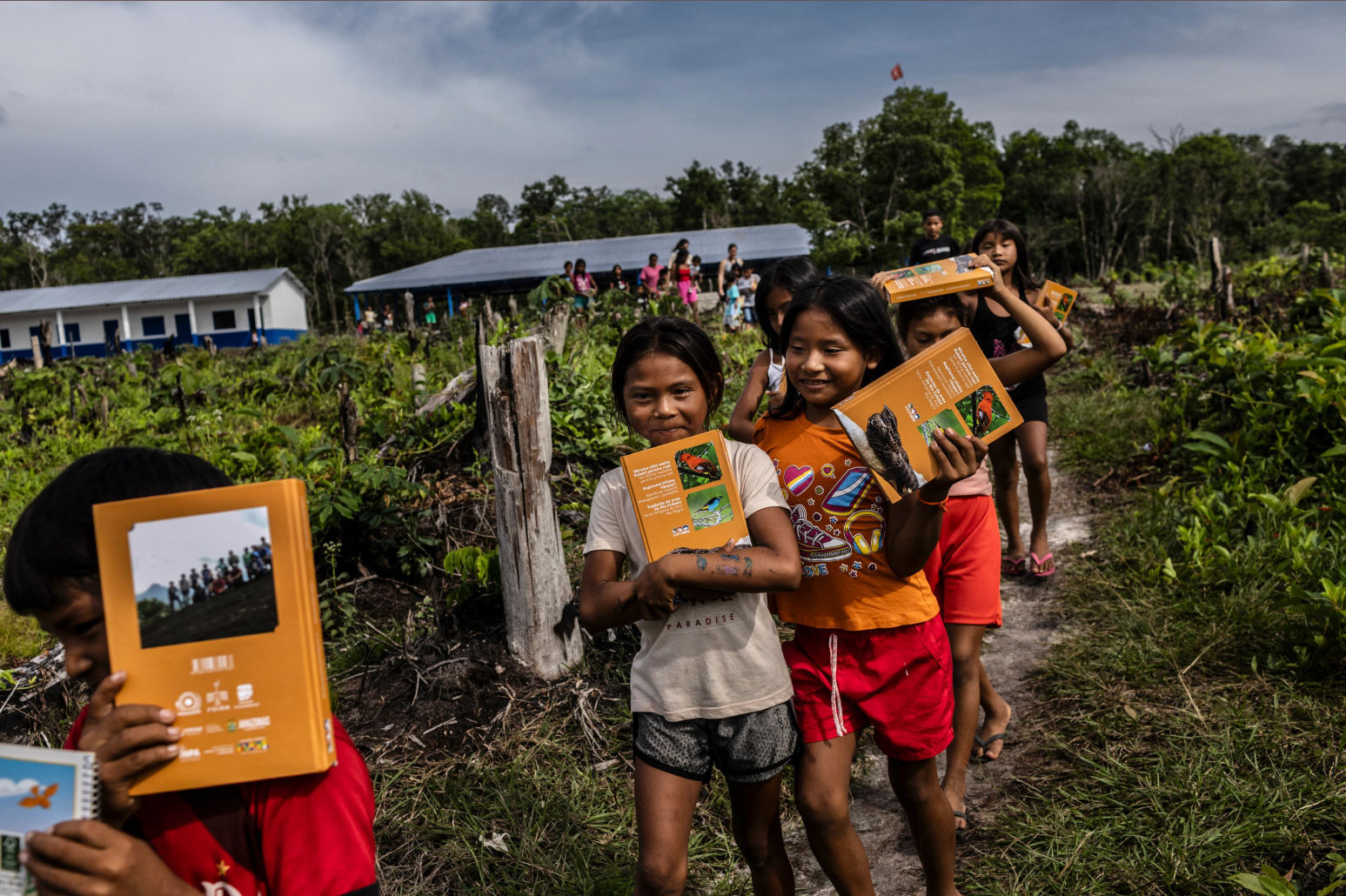
Today the Baniwa live in off-grid communities far from universities, libraries, and cities, with only limited internet access that arrived about three years ago. In the northwest of the Brazilian state of Amazonas, their villages lie within a vast mosaic of Indigenous lands accessible only with special permission from tribes and the federal government—a system put in place to safeguard Indigenous groups and help them maintain their sovereignty. Traveling to Nazaré from the closest town, São Gabriel da Cachoeira, requires a 5- to 10-hour journey on a motorboat.
In the nearly two centuries since Wallace’s expedition, only a few other naturalists and scientists have visited the area. Like him, they sought out local knowledge to make valuable observations but didn’t leave behind a record of what they had learned. Now, spurred by a rediscovery of Wallace’s historic visit, the Baniwa are leading a communal effort to survey local birds and document cultural traditions at risk as modern influences mount. But this time, they’re doing so on their own terms.
 Sofia Moutinho